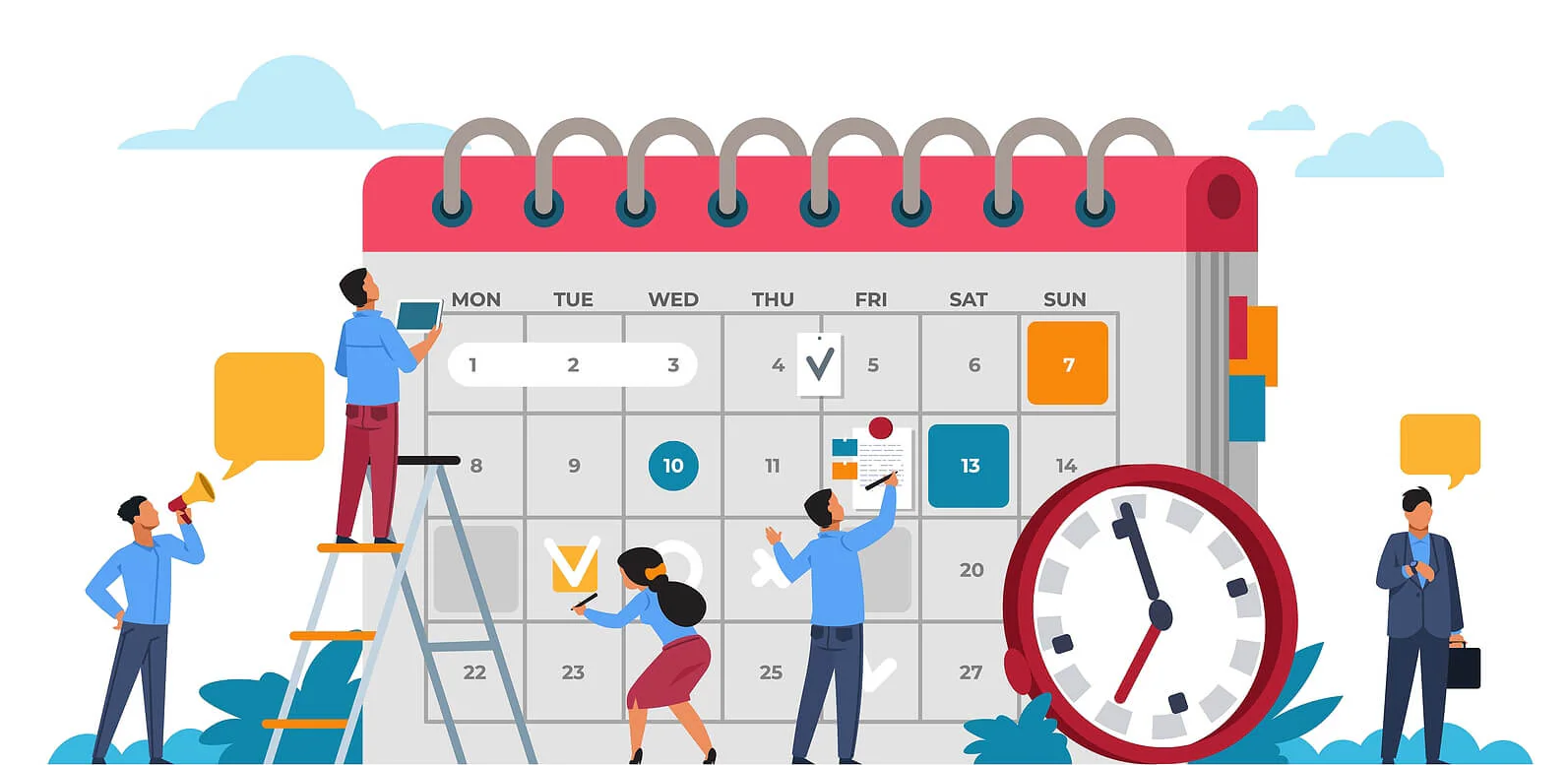
Planning an event doesn’t just cover what happens on the event day. It’s about doing the right things at the right time. When you don’t have a clear plan, there is a high chance that tasks might get missed or rushed. This is where an event timeline helps. With a clear event timeline in hand, you can see exactly what needs to be done at each stage, from the first idea to the final follow-up.
Imagine you’re planning a one-day business workshop. Six months prior, you are done with choosing the venue and setting your budget. Three months before, you started promoting the event and confirming speakers. A few weeks before the day, all the registration and ticketing tasks are done. After the event, you are now set to send thank-you emails and review feedback.
An event timeline will help you to put all of this into a simple plan, making the whole process easier and far less stressful.
Why an event timeline matter
An event timeline is more like a behind-the-scenes game plan. It is needed to keep all the moving parts of an event organized while making sure nothing slips through the cracks.
First, it brings structure to what can otherwise feel like a long to-do list. It lets you break the event into simple stages, before, during, and after, so that you always know what needs attention next. This leads to fewer last-minute “oh no, we forgot that” moments.
An event timeline also helps you keep everyone, including organizers, vendors, speakers and team members on the same page. With this, things run more smoothly, tasks don’t get duplicated, deadlines become clear, and communication becomes a lot easier.
It’s also a huge stress-saver. If you maintain a good timeline, you can easily manage time, people, and budgets without feeling overwhelmed. Also, you can spot potential delays early and fix them before they turn into bigger problems.
Most importantly, on the event day, your timeline lets you relax a little. You don’t have to worry about reacting to issues as they pop up; rather, you can follow a plan you trust.
Overview of a standard event timeline
When you follow a standard event timeline, you can plan with confidence as you can break the process into clear, manageable stages. Each phase focuses on specific decisions, so you’re not trying to do everything at once. Let’s start with the first and most important stage.
The foundation and vision (6+ months out)
This is where your event really takes shape. The decisions made at this stage influence everything that follows, so it’s worth taking the time to get them right.
Define core objectives
You must start by having a clear purpose for your event. It can be to educate, celebrate, generate leads, raise funds, or build community. So, know the “why” to get help in guiding every other decision—from the format and content to the venue and budget. With clear objectives, you can make it easier to measure success later.
Budget allocation
Once your goals are set, you can start outlining your budget. When you can identify your total spend, try to break it down into key areas such as venue, catering, marketing, speakers, technology, and contingency funds. Set the budget limits early to prevent overspending. Rather, you can invest more in the elements that matter most to your event goals.
Date and venue selection
Choose a date that works for your target audience. It will help you to avoid clashes with major holidays or industry events. At the same time, secure a venue considering your event size, format, and vibe. Lock in your date and venue early, as the availability can be limited. Also, you will get more options and better negotiating options.
Legal and insurance
This step is often overlooked when it is a must. You must review your contracts, apply for any required permits, and arrange appropriate event insurance. This may include public liability insurance, cancellation cover, or vendor agreements. Taking care of legal and insurance requirements early protects you from unexpected risks down the line.
Building momentum (3–6 months out)
This phase will help you in turning your plans into action. If you have the foundations in place, you can focus on locking in key details while building excitement around your event.
Vendor lock-in
Next, you need to confirm and contract your main vendors such as caterers, decorators, photographers, entertainers, and any tech providers. If you finalise things with vendors, it will reduce uncertainty and secure availability. Also, everyone can align on timelines, expectations, and deliverables.
Marketing and branding launch
If your event details are confirmed, you can run branding and marketing efforts via visual identity, messaging, and promotional channels. No matter whether you are running email campaigns, social media, event websites, or paid ads, early promotion will help you to create awareness as well as give attendees time to plan and register.
Content strategy
You have to define what content your audience will experience. It can be speaker line-ups, session topics, workshops, panel discussions, or entertainment. Confirm with the speakers and outline the event agenda so that you can use content highlights as part of your marketing push.
Sponsorship sales
This is an ideal way to approach sponsors. If you present strong sponsorship packages with a clear audience profile, event objectives, and branding in place, you can manage funding easily for your event.
Detailed execution (1–3 months out)
In this section, shift your planning into full execution mode. Keep the focus on details and coordination while making sure everything is ready to run smoothly.
Registration management
Manage all the registrations and ticket sales during this period. Monitor sign-ups and track attendee data, while adjusting capacity. As a preparation, to ensure a smooth experience, test the registration flows, confirmation emails, and payment processes.
Logistics deep dive
You have to handle the operational details professionally. You have to finalize floor plans, seating arrangements, equipment needs, catering schedules, load-in and pack-down times, and on-site staffing. Also, keep track of the timelines with all vendors and suppliers so everyone knows exactly what needs to be done and when.
Content finalisation
Finalise the agenda, session timings, and speaker details while collecting presentation materials, speaker bios, and session descriptions. This will help to run your program on schedule while giving you accurate content to share with attendees ahead of the event.
Communication plan
Create a clear communication schedule for attendees, speakers, vendors, and internal teams. Schedule everything, including emails, event-day instructions, arrival details, and last-minute updates.
Final countdown (1–4 weeks out)
In this phase, you have to bring everything together. If needed, double-check, confirm, and prepare for a smooth event day.
Confirmation and final counts
Ensure your final attendee numbers, catering quantities, seating, and vendor requirements. Then, share the final number with all suppliers to avoid any sort of last-minute changes.
Staff and volunteer training
Brief your team and volunteers on roles, schedules, and expectations. This way, everyone will know where to be, what to do, and who to contact on the day.
Print materials
You must prepare and print essentials like badges, signage, programs, run sheets, and check-in lists to prevent event-day stress.
Event week
This week, try to execute everything calmly and stay flexible as things happen in real time.
Pre-event walk-through
Check the layouts, entry points, signage, AV setup, and everything else to spot and fix any issues and avoid consequences.
The event day
Manage the team and maintain the communication flow. Arrive early, stay visible, and handle any last-minute changes quickly to keep everything running smoothly.
Real-time engagement
Engage all the attendees as the event unfolds through live updates, social media activity, interactive sessions, polls, or on-site support. If you stay responsive and connected, it can help you create a more memorable experience.
Post-event actions (Immediate to 1 month after)
What you do after the event is also important. This phase will help you to wrap things up properly while setting the stage for future events.
Immediate follow-up (24–48 hours)
Send thank-you emails to all your attendees, speakers, sponsors, and vendors once the event is done. Also share key highlights, photos, or recordings. It will keep the event fresh in everyone’s mind. This is also a good time to send feedback surveys.
Key deliverables (1 week later)
Provide all promised materials to your attendees, including session recordings, presentation slides, certificates, and recap content. Maintain follow-up on leads, sponsor commitments, and any post-event actions agreed during the event.
Financial and performance review
Review the final budget, check invoices, and find out the overall costs versus returns. Analyse attendance numbers, engagement levels, feedback, and KPIs to find out what worked and what can be improved for next time.
So, if you follow this standard event timeline, you can easily turn the complex process into clear, manageable steps. You can stay organized, keep everyone aligned, and avoid any last-minute surprises as well. No matter the size or type of event, follow a structured timeline to get more control and confidence from start to finish.