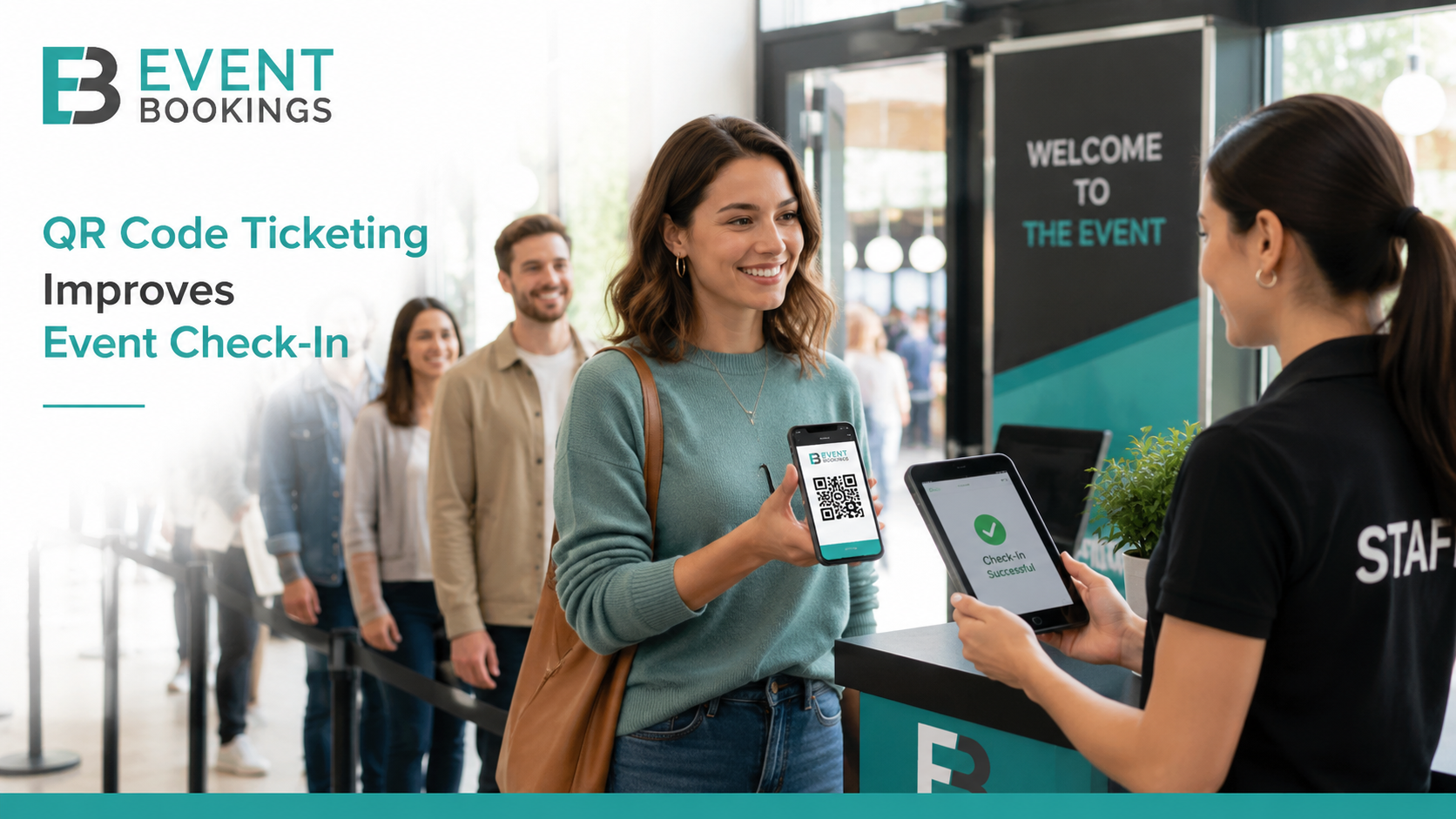
A smooth check-in helps set a positive tone for your event. Guests want to avoid waiting in long lines while staff search paper lists, check names manually, or deal with ticket issues at the entrance.
That is where QR code ticketing makes a real difference.
With QR code ticketing, every attendee receives a unique digital ticket that can be scanned at the door using a mobile device or scanning app. Instead of relying on manual validation, event organisers can validate tickets instantly, reduce bottlenecks, and track attendance in real time.
Whether you are hosting a conference, workshop, concert, fundraiser, seminar, festival, or community event, QR code check-in helps create a faster, more secure, and more professional entry process.
What Is QR Code Ticketing?
QR code ticketing means each ticket has a unique QR code tied to the attendee’s registration. When guests arrive, staff scan the code to check the ticket and mark them as present.
The QR code can usually be displayed on a mobile phone or printed on paper, giving attendees flexibility while still allowing organisers to validate each ticket quickly.
In a modern event ticketing system, QR code ticketing typically works like this:
- An attendee registers for the event or purchases a ticket online.
- The system automatically generates a unique QR code for that ticket.
- The attendee receives the ticket by email or through their booking confirmation.
- At the venue, event staff scan the QR code using a check-in app.
- The system confirms whether the ticket is valid, already used, cancelled, or assigned to the correct event.
- The attendee is checked in, and the attendance record updates in real time.
This simple process removes much of the friction that traditionally slows down event entry.
Why Event Check-In Matters

Check-in is one of the first direct interactions attendees have with your event team. If it seems slow, confusing, or disorganised, guests may carry that impression into the rest of the event.
Manual check-in methods can create several problems:
- Long queues at the entrance
- Staff errors when searching names or ticket numbers
- Duplicate or shared tickets being accepted accidentally
- Difficulty tracking who has arrived
- Limited visibility across multiple entry points
- Delays for VIPs, speakers, sponsors, or group bookings
- Poor first impressions for attendees
For small events, these issues may be manageable. But as attendance grows, manual check-in becomes harder to control. QR code ticketing gives organisers a scalable way to process arrivals quickly while keeping accuracy.
How QR Code Ticketing Improves Event Check-In
1. It Speeds Up Entry
The main benefit of QR code ticketing is speed. Instead of staff searching for names, checking order details, or looking through spreadsheets, attendees just show their ticket and staff scan the QR code.
A successful scan can confirm the ticket in seconds.
This helps cut down lines, especially during busy arrival times when lots of guests show up together. Faster check-in also takes pressure off front-door staff, so they can focus on greeting guests and handling any issues instead of checking in everyone by hand.
At busy events, even saving a few seconds per guest can make a big difference in how smoothly people move through the entrance.
2. It Reduces Human Error
Manual check-in leaves room for mistakes. Staff may mark the wrong person as attended, misread a name, accept the wrong ticket type, or overlook whether a ticket has already been used.
QR code ticketing reduces these threats by connecting each scan to a specific attendee or order record. The system verifies the ticket against the event database and gives staff a clear result.
This creates a more reliable check-in process and helps prevent common event-day issues such as:
- Incorrect attendance records
- Duplicate check-ins
- Confusion between attendees with similar names
- Wrong ticket category entry
- Missed check-ins during busy periods
Accurate data is especially important for events that need attendance reporting, session tracking, certificate eligibility, compliance records, or post-event follow-up.
3. It Helps Prevent Duplicate and Invalid Ticket Use
Sharing tickets or using the same ticket more than once can cause problems, especially at paid or limited-space events. If guests pass tickets to others or try to reuse them, manual checks might not notice immediately.
With QR code ticket scanning, each ticket can be validated at the point of entry. Once a ticket has been scanned and marked as checked in, the system can detect any further attempt to use the same code.
This gives staff a simple way to identify:
- Already-used tickets
- Invalid tickets
- Cancelled tickets
- Tickets for the wrong event
- Tickets assigned to a different attendee or category
This extra check helps protect your revenue, control event capacity, and improve security.
4. It Supports Contactless Check-In
Today, many guests expect digital event experiences. QR code ticketing meets this need by letting people show their ticket on their phone instead of using paper.
Contactless check-in is cleaner, faster, and more convenient. It also reduces the necessity for physical materials such as printed guest lists, paper tickets, and manual sign-in sheets.
For organisers, this means less admin before the event and fewer documents to manage on the day. For attendees, it means a smoother arrival experience with less waiting and less confusion.
5. It Gives Organisers Real-Time Attendance Visibility
One big problem with manual check-in is that attendance info is often late or incomplete. You might not know exactly how many people have arrived until staff check lists after the event.
QR code check-in changes that.
When tickets are scanned digitally, attendance records can update in real time. This gives organisers a live view of event entry and helps answer important questions such as:
- How many attendees have arrived?
- How many registered guests have not checked in yet?
- Which ticket types are being scanned?
- Are VIPs, speakers, or sponsors onsite?
- Are entry points becoming congested?
- Do staff need to open another check-in desk?
- Which sessions or activities are attracting the most attendance?
Real-time visibility helps organisers make better decisions while the event is still happening, not just after it ends.
6. It Works Across Multiple Entry Points
Larger events often need more than one check-in area. For example, a conference may have a main registration desk, VIP entrance, speaker check-in, workshop room, and networking session access point.
QR code ticketing makes it easier to manage multiple scan stations because staff can use connected devices to validate tickets from different locations. This helps stop bottlenecks at a single entrance and gives organisers more flexibility in how they design the attendee journey.
For events with different ticket types, access levels, or sessions, QR scanning can also help staff confirm whether an attendee is eligible for a specific area or activity.
7. It Improves the Attendee Experience
Attendees may not think much about event technology when everything goes well. But they certainly notice when check-in is slow.
A fast QR code check-in process creates a better first impression. Guests arrive, scan, and enter without excessive delays. This makes the event feel more organised and professional from the start.
A smoother check-in also helps staff connect better with guests. Instead of handling frustrated people in long lines, staff can greet everyone warmly and help those who really need it.
For premium events, corporate events, fundraisers, and conferences, that first impression matters.
8. It Reduces Paperwork and Admin
Traditional check-in often requires printed attendee lists, spreadsheets, paper tickets, manual notes, and post-event reconciliation. These tasks take time and increase the chance of errors.
QR code ticketing cuts down on paperwork. Tickets are made and sent out digitally, then scanned when guests arrive. Attendance is recorded right away, so there’s no need to enter it later.
This helps organisers save time before, during, and after the event.
It also allows a more sustainable event operation by decreasing unnecessary printing.
9. It Makes Post-Event Reporting Easier
Accurate check-in data is valuable after the event. It helps organisers understand actual attendance, no-show rates, ticket usage, arrival patterns, and attendee engagement.
This information can support:
- Sponsor reporting
- Internal performance reviews
- Capacity planning
- Future marketing campaigns
- Follow-up emails
- Certificate or attendance confirmation
- Session performance analysis
- Budget and staffing decisions
With QR code ticketing, organisers do not need to manually calculate attendance from paper records. The data is already captured during the check-in process.
Best Practices for QR Code Event Check-In
QR code ticketing is easy to use, but good planning makes it work even better. Here are some practical tips.
Send Tickets Early
Make sure attendees receive their QR code tickets well before the event. Include clear instructions in the confirmation email so guests know whether to show the ticket on their phone, print it, or both.
Test Scanning Before the Event
Before the event starts, test different ticket types with the devices your staff will use. Try scanning tickets on phones and printed ones, and see how it works in different lighting and internet conditions.
Train Your Check-In Staff
Make sure staff know what a valid scan looks like, what to do if a scan doesn’t work, and how to handle problems like duplicate tickets, wrong event tickets, or guests who can’t find their confirmation email.
Prepare for Peak Arrival Times
Most events have busy arrival times. Make sure you have enough staff, devices, and entry lanes for the rush. If you can, separate lines by ticket type, registration, or group.
Have a Backup Process
Even with a strong digital system, it is smart to prepare for edge cases. Have a process for checking in attendees manually if their phone battery dies, their QR code will not load, or there is a temporary connection issue.
Use Clear Signage
Help attendees know where to go. Signs such as “Have Your QR Code Ready” or “General Admission Check-In” can reduce confusion and speed up the line before guests reach staff.
QR Code Ticketing with EventBookings
EventBookings helps organisers manage online ticketing, registration, and attendee check-in in one place. With EventBookings’ Scan Station, organisers can scan tickets, check in attendees, record attendance, and track attendee activity in real time.
This lets your team manage entry confidently, without needing printed lists or manual checks.
With EventBookings, QR code ticketing can help you:
- Create a smoother check-in experience
- Validate tickets quickly at the door
- Reduce queues and attendee wait times
- Track attendance in real time
- Improve ticket security
- Support digital and printed tickets
- Simplify event-day operations
- Access better attendance data after the event
Whether you are organising a small workshop or a big event, a reliable QR code check-in process helps your team stay in control from the moment attendees arrive.
Common QR Code Ticketing Mistakes to Avoid
Using Generic QR Codes Instead of Unique Ticket Codes
A general QR code that links to your event page is good for promotion, but it’s not the same as a unique ticket QR code. For check-in, each guest needs their own code that can be checked individually.
Not Testing Printed Tickets
Some guests will print their tickets. Make sure printed QR codes are clear, high-contrast, and large enough to scan easily. Poor print quality can slow things down at the door.
Relying on One Device
For events with more than a small number of attendees, relying on one scanning device can create a bottleneck. Use multiple devices or entry points where appropriate.
Forgetting Staff Permissions and Access
Make sure the right staff members have access to the scanning app or check-in tools before the event begins. Last-minute login difficulties can delay entry.
Ignoring Real-Time Data
QR code check-in is not only about scanning tickets. Use live attendance data to make better event-day decisions, such as opening another entry lane or following up with key guests who have not arrived.
Is QR Code Ticketing Right for Your Event?
QR code ticketing is useful for almost any event where attendees need to register, purchase tickets, or confirm entry. It is especially valuable for:
- Conferences
- Workshops
- Training sessions
- Fundraisers
- Festivals
- Concerts
- Community events
- Corporate events
- Networking events
- Seminars
- Exhibitions
- School and university events
- Sports events
If your event involves guest lists, tickets, capacity limits, paid admission, multiple ticket types, or attendance tracking, QR code ticketing can make check-in faster and more reliable.
Final Thoughts
Event check-in should not be the most stressful part of your event. With QR code ticketing, organisers can replace manual lists and slow verification with a faster, smarter, and more secure check-in process.
Attendees get a smoother arrival experience. Staff get a simpler way to validate tickets. Organisers get accurate real-time attendance data.
That combination makes QR code ticketing one of the most practical upgrades for modern event management.
If you are planning your next event, EventBookings gives you the tools to sell event tickets, manage registrations, scan attendees, and track check-ins with confidence.